It’s interesting to note that Afghanistan and parts of northern Pakistan, and then a thousand miles away, to what is now Bangladesh, were heavily majority Buddhist regions, while in between their long distance, it was mainly Hindu thanks to their warrior Kshatriya traditions rooted in Hinduism, which is why they are still Hindu. But unfortunately, over time, they have mostly become followers of pseudo-Hinduism, which is rooted in this Buddhist-Jain mindset of escapism, which is why the Gandian Jain Taliban are in control of Afghanistan.
To understand the symptoms of this pseudo-Hinduism virus that’s affected the Hindu mindset, look around you.
For example, does your local temple or the major Hindu temples you visit have any exhibits on the persecution of Hindus? Or do they talk about the persecution of Hindus, past and present? If not, that’s a trait of pseudo-Hinduism.
Or if you ask the Hindus running the temple or the swamis visiting about whether they raise Hindu persecution issues, and if they shout you down, saying Hinduism is not about being political, but it’s about not being attached to this world, then that’s another trait of Pseudo-Hinduism.
The impact and symptoms of this virus of Pseudo Hinduism have turned most Hindus into wimps who can’t even defend Hinduism either as a majority in India or anywhere across the world, but instead make escapist airy fairy excuses, distorting Hinduism to get out of taking action.
Even the Bhagavad Gita, which is a chapter of the Mahabharata, has been turned into an inner battle solution, divorcing it from the outerbattle solution to take on Adharma, which is why when you read it within the context of the Mahabharata, you know it’s about fixing the inner battle first, then unleashing the focus to fight all the outer battles in this world for Dharma like Arjun did.
They can go in their 100s of millions to the Kumbh and other Hindu festivals, but when it comes to defending Hinduism, then they do the indian vanishing rope trick. Which is why they are sitting in India as third-class citizens thanks to the pseudo-Hinduism virus.
This has led to keeping Hindus weak and oppressed under the guise of them thinking they are highly spiritual, where even a real muscle-defined kshatriya has been turned into an unfit potbelly intellectual ‘kshatriya’. Can it be cured ? of course, and ironically through Hinduism itself. But to understand this mindset, one has to go back into its long history, as Sri Aurobindo saw a long time back, as he briefly explains,
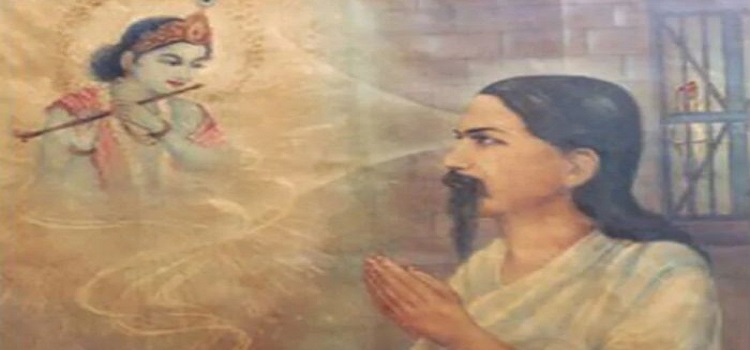
‘Buddhism with its exaggerated emphasis on quiescence & the quiescent virtue of self-abnegation, its unwise creation of a separate class of quiescents & illuminati, its sharp distinction between monks & laymen implying the infinite inferiority of the latter, its all too facile admission of men to the higher life and its relegation of worldly action to the lowest importance possible stands at the opposite pole from the gospel of Srikrishna and has had the very effect he deprecates; it has been the author of confusion and the destroyer of the peoples.
Under its influence half the nation moved in the direction of spiritual passivity & negation, the other by a natural reaction plunged deep into a splendid but enervating materialism. As a result our race lost three parts of its ancient heroic manhood, its grasp on the world, its magnificently ordered polity and its noble social fabric.
It is by clinging to a few spars from the wreck that we have managed to perpetuate our existence, and this we owe to the overthrow of Buddhism by Shankaracharya. But Hinduism has never been able to shake off the deep impress of the religion it vanquished; and therefore though it has managed to survive, it has not succeeded in recovering its old vitalising force.
The practical disappearance of the Kshatriya caste (for those who now claim that origin seem to be with a few exceptions Vratya Kshatriyas, Kshatriyas who have fallen from the pure practice and complete temperament of their caste) has operated in the same direction.
The Kshatriyas were the proper depositaries of the gospel of action. But when the Kshatriyas disappeared or became degraded, the Brahmins remained the sole interpreters of the Bhagavadgita, and they, being the highest caste or temperament and their thoughts therefore naturally turned to knowledge and the final end of being, bearing moreover still the stamp of Buddhism in their minds, have dwelt mainly on that in the Gita which deals with the element of quiescence.
Time, however, in its revolution is turning back on itself and there are signs that if Hinduism is to last and we are not to plunge into the vortex of scientific atheism and the breakdown of moral ideals which is engulfing Europe, it must survive as the religion for which Vedanta, Sankhya &Yoga combined to lay the foundations, which Sri krishna announced & which Vyasa formulated.
– Sri Aurobindo, Early Cultural Writings.
more